


Check Out Our New & Popular Books
"One God, One Mediator, One People" is now available in paperback in our store and other popular books and items.
Shop Now
"One God, One Mediator, One People" is now available in paperback in our store and other popular books and items.

Many in the world celebrate Christmas; however, I sometimes wonder how many remind themselves of why Jesus came into the world. Often, we may say, yes, we know. A reminder is a vital aspect of our lives. Jesus came into the world for one reason: to make it possible for us to be forgiven of our sins and go to heaven when we die. Jesus said, “For the Son of Man came to seek and save the lost” (Luke 19:10). This forgiveness is not automatic. We must ask for it. It is free, but there is a condition: Repentance. Sadly, only a few churches today emphasize this crucial requirement. Often, I think about how very pleasing it is for the devil to see humans forget about sin and its ability to destroy marriages, families, churches, ministries, and even society.

Both Islam and Christianity believe that God sent His messengers to lead human beings into the right path. They do differ as to how to deal with the separation between God and man caused by the sin of men, which the Bible clearly states is evident in the whole of humankind, “There is no one righteous, not even one” (Romans 3:11), for, “all have sinned and fall short of the glory of God” (Romans 3:23). In general, sin means transgression of the law of God (1 John 3:4). This law exists because God is Holy and so cannot abide with evil. It is offensive to God no matter what the sinner’s excuse or how insignificant the sin.
The Qur’an also tells us that all are guilty and unworthy to be saved. If God were to judge us all according to his rules, none of us would be saved. “If Allah were to punish men for their wrong-doing, he would not leave, on the earth, a single living creature” (Sura 16:61, see also Sura 35:45).

Indeed, this life is given once, and we should use it to the full for his glory. A general misunderstanding of Jesus’ teaching on persecution is that believers humbly do nothing while being attacked or assassinated. Certainly, retribution and hostility are not, at all, part of a biblical response (Romans 12:19; John 18:23-40); it does not mean that believers should not seek to escape harm when possible. Jesus told his followers to flee persecution in one town by moving to another (Matthew 10:23). This way, the good news about faith in Jesus will spread throughout the towns and cities. In the book of Acts, we see how the religious leaders launched the first great persecution against the church in Jerusalem after stoning Stephen. This caused the disciples to scatter through the “regions of Judea and Samaria” (Acts 8:1-4), but they preached the word wherever they went. They did not become secret believers; they still shared the gospel.
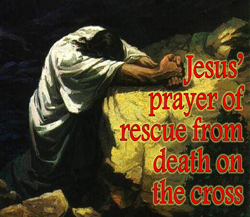
The Bible states, “During the days of Jesus’ life on earth, he offered up prayers and petitions with fervent cries and tears to the one who could save him from death, and he was heard because of his reverent submission” (Hebrews 5:7). Some 'friends' claim that Jesus' plea was heard and was rescued. Is that so?

The Holy Spirit - As an Ahmadiyya Muslim and later as a Sunni Muslim, it was a subject I did not know much about. Though the word for Spirit, ruh, is used twenty-one times in the Qur’an, nowhere is it used so clearly as in the Bible and especially in the New Testament. When people asked Muhammad about the definition and the working of the Spirit, the only revelation he claimed to have received from God was: ‘They will question thee concerning the Spirit. Say: The Spirit is by command of my Lord, and of knowledge, ye have been vouchsafed but little’ (Sura 17:85). The Qur’an speaks of the Holy Spirit, Ruh al-Quds also, but Muslims take it to be the title of angel Gabriel. Yet the Holy Spirit, as mentioned as the Comforter and advocate in the New Testament, is interpreted by them to be Muhammad. As a Muslim, I had a problem with such a claim. I wrongly believed that the Bible was corrupted like many other Muslims, so there was nothing to quote in favor of Muhammad.